
introduction: in audi germany's server maintenance practice, the operation and maintenance team needs to face multiple types of failures such as network, hardware, storage, application and security. this article sorts out common fault types and quick location and processing methods from a practical perspective to help improve response speed and reduce the risk of business interruption.
network and dns failures: first checkpoints
network failure is a common reason for server unavailability. first, check the status of physical links, switches, and routers, and confirm port and vlan configurations. secondly, check whether dns resolution is abnormal, including forward and reverse resolution, and eliminate domain name resolution delays or failures caused by dns cache or forwarder failures.
bandwidth, packet loss and connectivity troubleshooting
when delays or intermittent interruptions occur, tools such as ping, mtr, and traceroute should be used to determine packet loss and hop count abnormalities; combined with traffic monitoring (such as netflow, sflow) to determine traffic peaks and attack traces; if necessary, capture packets (tcpdump) to locate tcp handshake or retransmission issues.
common faults and early warnings at the hardware level
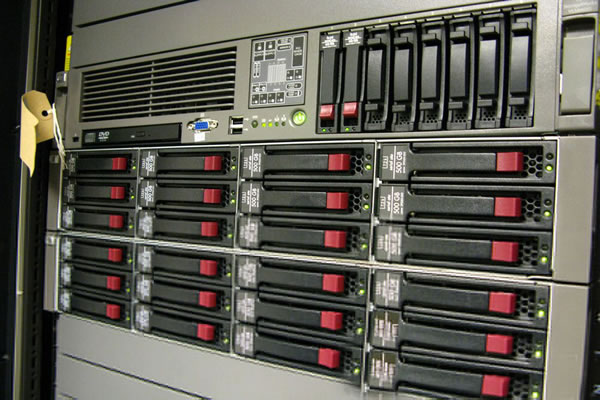
hardware failures include disk damage, raid degradation, network card failure, abnormal power supply, and fan overrotation. query temperature, power supply and hardware self-test information through bmc/ilo, ipmi or host logs, combined with monitoring alarms to detect potential risks in advance and prepare replacement parts or migration plans.
key points in handling storage and disk faults
disk i/o abnormalities will directly affect application performance. check smartctl, iostat and dmesg logs to confirm bad sectors or queuing delays; raid reconstruction should evaluate the reconstruction window and avoid performance crashes caused by concurrent writes. if necessary, perform read-only mounts or migrate data to healthy devices.
diagnosing memory, cpu and power issues
high cpu or memory usage is often caused by process leaks or abnormal loads. use top, htop, and vmstat to analyze processes and memory allocation; at the hardware level, confirm ecc or dimm errors through memory self-test and motherboard logs; when encountering power abnormalities, switch to redundant power supplies as soon as possible and record power event logs.
service and application layer failure analysis
application layer failures include process crashes, unavailability of dependent services, configuration errors, or failed release rollbacks. check application logs, systemd service status and port monitoring status; use the health check interface and log aggregation system to quickly locate exception stacks and error codes to implement orderly rollback or restart strategies.
emergency strategies for database and cache issues
slow query, lock waiting or master-slave synchronization interruption in the database will affect the business. check the slow query log, lock table information and replication delay first. for cache (redis, memcached), you should check the memory elimination strategy and persistence configuration. if necessary, temporarily add instances or switch the read-write separation strategy to restore performance.
issues caused by certificates, clocks and authorization
expired ssl certificates, system clock drift, or authorization verification failures often result in service unavailability. regularly check the certificate validity period, enable automatic renewal (such as the acme scheme), ensure that ntp synchronization is normal, and check oauth/saml and other authentication logs to quickly locate the cause of authentication failure.
summary of quick positioning and processing methods
when encountering a fault, you should follow the fault response process: 1) quickly isolate the affected scope; 2) collect key logs and monitoring indicators; 3) implement emergency measures with rollback guarantee; 4) conduct root cause analysis and write recovery and preventive actions after the problem is alleviated. keep change records and communication transparent to facilitate subsequent review.
summary and suggestions
summary: audi germany server maintenance needs to cover multiple dimensions of network, hardware, storage, application and security, and relies on complete monitoring, logs and automation tools to achieve rapid positioning. it is recommended to establish a standardized fault handling process, regular drills and capacity predictions, and accumulate experience into a knowledge base to improve long-term stability.
- Latest articles
- How To Optimize Cross-border E-commerce Access Speed And Stability Through Cambodia Cn2 Return Server
- Cambodian Server Alibaba Cloud’s Practical Experience In Network Acceleration And CDN Integration
- How To Set Up A Korean Purchasing Agent Group? Precautions And Risk Control Strategies For Compliance Operations
- Practical Experience Sharing On Vps Cambodia Node Selection And Global Deployment Strategy
- Operation And Maintenance Exchange American Cloud Server Bar Common Troubleshooting And Response Experience
- Migration Case Analysis: How To Smoothly Switch To Singapore Cn2 Cloud Server And Ensure That Business Is Not Dropped
- A Beginner's Guide Teaches You How To Identify The Service Quality And Potential Risks Of Cheap Hong Kong Site Groups
- How SEO Webmasters Use Vietnam Cn2 To Improve Search Rankings In The Vietnamese Market
- Comparing The Cost-effectiveness And User Experience Of Triple-network Cn2 Malaysia With Single-network Access
- How Can Enterprises Incorporate Free Unlimited Traffic Hong Kong Cn2 Into Disaster Recovery And Capacity Expansion Plans?
- Popular tags
-

Improving Transmission Stability: Common Faults And Optimization Methods For Communication Lines In Server Rooms In Germany
Guide to improving the stability of communication lines in German data centers, analyzing common failure types in Germany and providing actionable optimization methods, including physical layer maintenance, link redundancy, traffic management, and real-time monitoring. -

How To Quantitatively Compare The Performance Of Multiple German Server Hosting Providers Using SLA Metrics
This article explains how to quantitatively compare the performance of various German server hosting providers using SLA metrics, covering key factors such as availability, response time, bandwidth, backup, and compensation terms, along with practical steps. -
Best Practices And Innovations In Agent Collaboration In German Computer Rooms
Explore the best practices and innovations in agent collaboration in German computer rooms to improve work efficiency and team collaboration.